Frequency-based signal
LVR measures position through a resonant frequency shift rather than relying on analog voltage amplitude as the primary measurement.
LVR is a patented non-contact linear position sensing technology that uses changes in resonant frequency to determine target position. The sensing element can be placed in the harsh environment while the electronics remain in a protected location.
In an LVR sensor, a conductive target moves relative to a coil structure. As the target position changes, it changes the electrical characteristics of the resonant circuit. That change is measured as a shift in frequency.
The frequency measurement is then processed into a position output. Because the measurement is based on frequency rather than analog signal amplitude, LVR can reduce sensitivity to issues such as signal attenuation, electrical noise, and wire-resistance changes.
LVR measures position through a resonant frequency shift rather than relying on analog voltage amplitude as the primary measurement.
The technology is developed around measuring the position of a moving target without mechanical contact between the target and sensing element.
The sensor architecture supports applications where heat, pressure, corrosion, radiation, or magnetic fields can complicate conventional sensor selection.
The same resonance principle may be adaptable to other measurement types, including gap, rotary, or liquid level sensing. However, LRT Sensors’ primary development and testing has focused on non-contact linear position measurement.
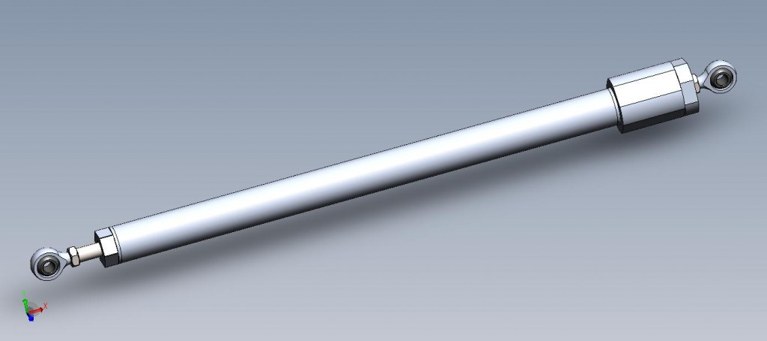
LVR has been used in linear sensors up to 2m long.
Send the measurement range, target material, temperature exposure, installation constraints, and environmental conditions. LRT Sensors can help determine whether LVR is a fit for the application.